Sunday, July 13, 2014

Homily - 15OT-A

   Last week in the Gospel, we heard a most comforting line, perhaps the most comforting message of the entire Gospel: “Come to me all you who labor and are burdened, and I will give you rest.”   Our second reading today—an amazing passage from St. Paul—speaks from the perspective of one who knew what suffering was all about, and what the comfort of God’s word could provide.  Paul, as you know, traveled all over known world proclaiming the Gospel and spreading the seed of God 's word.  Sometimes he was graciously accepted in the communities he visited, and sometimes he just barely got out there with life.  There was no hardship he did not know-- shipwreck, hunger and cold, persecution, doubt and heckling, and ultimately even the executioners sword.  It was the comfort of the Lord’s yoke which was easy and the burden which is light that sustained Paul in his journeys, planting the Word of God across the Mediterranean.
   So Paul writes to the Romans, “I consider that the sufferings of this present time are as nothing impaired to the glory to be revealed for us.”  We Christians have a long history of enduring our sufferings with the idea that someday—someday—things will all turn out ok for us in the end--that it will all meet a great divine equalizing force in the final wash.  This is one way that we understand Jesus’ call to who are weary, that they may find rest in his heart and in his gaze.  But even as we look to the world to come and its perfect justice, Paul seems to tell us that the sufferings we endure today have value.  The Christian journey is not simply a “get out of jail free” card when it comes to suffering and loss and scarcity and insecurity—those who follow Christ most faithfully are, in fact, beset with trials and tribulation, culminating in the invitation to “take up your cross and follow me”!
   But look at what Paul says: “for creation itself was subject to futility…” our creation, of our world we live in, is completely futile…. there is there is no getting out of it alive.  The winner is not the one with the most toys.  There is no promise that we will always have food on our tables or wonderful life-long health.  We can’t be sure that even with our best efforts our children will be straight-A students, or happy, or remain Catholic, or be guaranteed a long life.  Our brand new car out in the lot might have a ding on it after Church, and there might not be enough sweet-potato fries at the restaurant after Mass this morning.  This world is subject to all sorts of shortages, injustices, little-deaths, and, as Paul says it, “futility”.   We do not suffer of it on its own accord… nature is not inherently bad… but it is futile, it is lacking in the fullness of the glory of God.  And so, here’s Paul’s point: “creation itself was subject to futility”, but “I consider that the sufferings of this present time are as nothing compared to the glory to be revealed in us”!  To simplify Paul’s thought even further, we might say that realizing the limits of this world… our sufferings, our losses, our shortages, have a way of pointing us to the reality of our eternal destiny which lies in God.
  God’s hope in creating this world beset by shortages and injustices… where bad things happen to good people… was not to torment us, but to “set [us] free from slavery to corruption, and share in the glorious freedom of the children of God”.  You see, when we become dependent and sufficient in the things of this world, we become slaves to them, don’t we?  We find comfort in the presence of worldly pleasure, and suffer pain in their loss.  Satisfaction, contentment, goodness, and ambition lies clearly within our sight, limiting us to only what we can see and what we can grasp.  But we are not self-made people.  We are not even self-sufficient.  In the deepest part of our being, we depend on a God who lies outside of ourselves and draws each of us, through years of growth in wisdom and knowledge and virtue into the perfection of his own life.  I stand here today as one who still needs to ‘grow up’ in God’s grace and mercy, for he is not done with me yet.  I honor that growth and that struggle that continues in each of us, as we come to know ever-more dearly the grace of God’s continuing creation… an on-going act of his love that brings each of us into a greater share in divine life.  As long as we draw breath, we are being molded (sometimes by trial and tribulation) into signs of his grace and glory, and as a harvest of sixty or a hundredfold to his investment in us.  What we shall become remains yet be seen in its fullness, and so we cast our gaze not on this world, but on the promise ahead.  For in that promise, ‘eye has not seen, ear has not heard, nor has it dawned in the mind of man what God has ready for those who love them’! 
   Take what Paul teaches this morning, now, and bring it into the Gospel we just heard proclaimed.  Jesus offers a parable about the harvest gained after a farmer scatters seed.  At the end of the longer form of this Gospel (which we did not read today), we hear Jesus explain that the seed on the good land is the heart which is open to the Word of God and follows it—yielding an astounding harvest to the glory of the master.  The seed placed upon less hospitable ground did less well as it was swallowed up by its surroundings and failed to yield.  Traditionally, we interpret this Gospel as a call to us to be the ‘good ground’… to be open to the fruitfulness of the Word of God scattered about generously—even wrecklessly!  And this is an easy and comforting interpretation for us preachers… if our words about the scripture are being spread about, we cannot be paralyzed by the realization that maybe only half of our crowds at Mass are hearing and acting on what has been said… we continue to preach anyway.  And it’s not just preachers, but parents and teachers and so many more who communicate the truths of the world with us, only to realize that so often our words fall on deaf ears.  But let me turn this Gospel on its ear a bit…what if we are not the land receiving the seed, but what if we are the seed instead--created and blessed and fruitful in God’s grace, being spread to all corners of the earth and into every situation of human life?  Some of us are spread on fruitful ground and into fruitful situations and are successful beyond anyone’s wildest dreams… but some have heart-aching challenges and experience devastating setbacks.  Some are struck down in the prime of life, and others lack the basic nutrients and encouragement to put down deep roots and succeed.  Can there be hope in this Gospel, if we look at it in that light?
   God is the master of the harvest, and wherever he plants, he will expect and receive a return.  I would suppose that there isn’t a seed that is spread from his hand that he does not care for greatly, as plentiful as the seed is and as random as it seems to be scattered.  But what happens to seed scattered on rocky ground?  What happens to seed spread on inhospitable land?  There is always some that will survive and grow, and in doing so, change the land, change the environment, and give hope to future plantings in the same place.  Perhaps there will be individual cases of success, even in the most unlikely of environments.  In our Christian tradition, we might ask if these might be the martyrs… those who gave everything they had—and life itself—to the glory of God.  Their seed spread in places of injustice and persecution, their job was not to yield fruit to the harvest, but to help ‘break new ground’ for those who would come after.  Tertullian is famously quoted that, “the blood of the martyrs is the seed of the Church”.  Those who fall to the ground and die like a single grain of wheat, trusting completely in the master of the harvest to redeem that act of self-sacrifice, will yield a great return to the harvest-master… no matter what!  As our vision of eternal glory is not circumscribed by the limits of this world, so too the results of the harvest are not simply a matter of counting that which is seen, that which can be sold at a price, and that which builds up supply and contentment for this world’s glory.  Fruitlessness as this world foresees it is a reminder that there is another measure, another reality to be looking for.  In the Kingdom, that which is scattered cannot return to the harvest-master void, but will instead achieve the end—a divine end—for which God sent it.
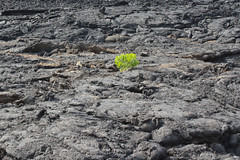
   We have an invitation set before us today which is urging us on to greater growth in God’s grace, even as worldly futility threatens our hope and confidence.  From this altar, and in union with the Church throughout the world, we receive a taste of God’s life and fruitfulness—and then from this place in moments we will be scattered into the great expanses of the world… into homes and workplaces, onto the highways and skyways, into places of service and suffering, places of need and even places of temptation.  As individual grains of seed, we bear the image of Christ and his Word, that our master may return for a harvest wherever it lands... and while there is rejoicing in a return of forty, sixty, or even a hundred-fold, God's glory is also served who allow themselves to be scattered and yield a harvest of self-sacrifice and faithfulness which might not be measured righteously by this futile world.  Our Eucharist is a foretaste and promise of something great—that each seed, wherever it may be sown, bears the covenant of God’s enduring love and fruitfulness which transcends suffering and death unto the glory that will yet be revealed in us.

I'm back...

After a three-month hiatus, which has no better explanation than simply 'I got busy', I'm now reporting in from my new-old digs in Quincy.  I have a few half-done blog articles I need to complete, and this week I also have a new homily to offer.  I'll get caught up with the blog as my time allows.

This week I'm trying out a computerized mp3-to-text translator, which translates what is said in a recording (for instance, a homily) and then puts it into a text file.  Not only is the computerized translator not very good at working out my Central-Illinois accent and getting the right words in the right place, but my extemporaneous delivery style does not necessarily translate well back into a sensible text.  So, with a lot of liberties on my part to re-translate what I said into something that is readable and hopefully edifying, here comes my homily for the 15th Week of Ordinary Time (Cycle A)...

Friday, April 18, 2014

Stabat Mater: Gregorian Melody

The Stabat mater, which we have been listening to throughout Lent on Fridays, finds its origin as a Sequence for Mass on September 15, the feast of the Holy Cross and is used today as a Sequence for the Feast of Our Mother of Sorrows, September 16.  As I have explained before, sequences are an insertion of the Middle Ages into the Order of Mass which had a strongly devotional and didactic flavor, which used the language of doctrine and theology (rather than scripture, strictly speaking) to communicate the faith.  By the time of the Council of Trent, hundreds of them littered the liturgy, perhaps something akin to singing a sacred (but not strictly scriptural song) from our various hymnals each week before the Gospel.  In the reforms of the Council of Trent, this pious custom was jettisoned from almost all Masses, save a small few.  Even fewer remain today following the reforms of the Second Vatican Council.
   The liturgical sequence invites us, through song and music, to consider and meditate on the greatest mysteries of our faith.  Consider the fiery Dies Irae warning sinners of the coming of God to judge the living and the dead.  Consider the elation of the Victimae Paschales Laudes proclaiming Jesus raised from the dead.  Consider the breath of the Spirit breathed on the disciples in phrases and poetry of the Veni Creator Spiritus.  In these last seven weeks, the intent of these articles were to highlight artistic attempts to capture the pathos of the Blessed Mother's own suffering at the foot of the cross, as a model and inspiration us today.  Are we strengthened by the Mother's witness?  Are we sorrowful for the sins that lead to such a great sacrifice?  Can we stand faithfully by the cross and witness the glory of the Lord revealed for all time?  That's the invitation of the Stabat mater and the series that completes today.
   And so today, to finish up, the unvarnished, unaccompanied chant that dates to the medieval Church:


Sunday, March 23, 2014

Homily Notes: Third Sunday in Lent (Year A)

   The Western Church presents a triptych of readings on Sundays 3, 4, and 5 of the "Year A" cycle of Lenten readings in the ordinary form--readings that are so iconic to the spirit of Lent and the regeneration of souls, that the Rite of Christian Initiation of Adults (RCIA) prescribes them to be read every year (in years "B" and "C" as well) when catechumens are present and the pre-baptismal exorcisms ("scrutinies") are pronounced over them.  Along with this week's reading of the "Woman at the Well", next week we will hear about the "Man Born Blind", and the week after, the "Raising of Lazarus".  From these three readings, the Lord is seen as one who has the power to turn the barren soul fruitful in right worship, to give enlightenment to the blind, and finally, to raise the dead to life.  All of these mighty works are achieved in their recipients by the acceptance of our Lord in faith as the Messiah.
   Parenthetically, in the Orthodox Church this reading is part of the Easter ("Pascha") cycle, and the woman at the well is given a name, St. Photini (the 'enlightened one').  She was considered "equal" to the apostles, as the first to be commissioned to take the Good News of our Lord to the citizens of Samaria.  While chronologically before the passion, death, and resurrection of the Lord in the Gospel of John, the importance of this reading, highlighting the clemency of our Lord in the conversion and regeneration of sinners by his saving work is clear.
   The reading begins by explaining that Jesus had been in conflict with the Pharisees.  In chapter 3 of John's Gospel, Jesus revealed himself to the Jewish leader Nicodemus as nothing less than the 'Son of God' through whom one must be 'born again' to have eternal life.  Nicodemus continued to respond to the Lord in questioning ambivalence to his revelation, apparently preferring to remain in the dark, than to accept the transformative Love of God, which came, not to condemn the world, but that the world might be saved through faith in him (cf John 3:16ff).  Thus, as Jesus was traveling down from Galilee to Jerusalem, (which would have necessitated his transit through the unfriendly region of Samaria and the town of Sychar,) he would not only be exhausted by the journey through the desert itself, but he would likely be suffering a certain kind of spiritual exhaustion, having failed up to that point to have gained the faith of the people and failed (so far) in fulfilling his mission of drawing all men and women into the love of God the Father.  Indeed, Jesus no doubt could see that the world was full of unenlightened sinners, lost in the shadows of death, and unresponsive to the invitation of partaking in the joy of the 'Father's House'.  His work would be cut out for him, if he was to reveal the love of the Father to all the world, if his own people would completely reject him--and not with scorn and persecution at this point, but through what I would argue to be the much more painful attitudes of indifference and ambivalence.
   And so, Jesus approaches the well in Sychar at the sixth hour--about noon--and finds a woman present.  He asks for some water.  Immediately. we recognize that the request is wrapped in a kind of triple symbolism.  First: water is praised throughout scripture as the source of fruitfulness in the desert.  Our first reading from Exodus 17 speaks to this.  We hear in a number of important places in Isaiah (such as chapter 35 and 44) that the desert (as an icon of the parched soul) will be made fruitful by the gift of water.  We hear the prophecy (Ezekiel 47) that water will flow from the temple, growing into an ever-greater stream nourishing all the nations.  The psalms are replete with further examples.  None other than Jesus himself had been discussing the importance of water as the means of rebirth and regeneration... Nicodemus was told that he must be reborn of water and the spirit (John 3: 5), a water that unmistakeably needs to be associated with the Sign of Cana (in John 2) where water was the precursor to a renewed celebration of the coming of the Kingdom of God in Jesus.
  Secondly, we see a more subtle symbolism in the interaction of these two at the well.  A man approaching a woman at a public well would have the biblical connotation of 'flirting' between the man and woman.  Indeed, this would be confirmed by the progression of the conversation into the revelation of the marital status of the woman--married five times previously, and unsuccessfully joined at the moment.  But this 'flirtation' is not rooted in mere physical attraction, but rather in divine love God has for his people.  Make no mistake, Jesus is indeed 'wooing' this woman's affections, but in a way to satisfy her need that the world cannot give.  Again, this interpretation flows from the Wedding at Cana two chapters before, where the Lord endorses marriage as a sign of the Kingdom.  Flowing from the wedding bond is the new fruitfulness of the husband and wife where, according to the near-Eastern understanding of the day, the husband makes the wife fruitful in the marital bond, and the wife in turn bears children as gift to her husband.  The fruitfulness of the waters and rains in the desert had the same effect-- as the waters make the earth fruitful, so to is humanity refreshed, returning glory to God, the Father of the rains.
   Finally, the reading tells us that the encounter between Jesus and the woman takes place at the height of day... at the height of enlightenment, where nothing is hidden and all is to be revealed.  No doubt neighbors saw the encounter and a discussion of the event would be 'news' (gossip) about the community.  This foreign 'prophet' spoke (flirted) with a woman whose shame was precisely that she was not in a faithful, fruitful spousal relationship.  Exposed at that noonday hour to the criticism and judgment of her neighbors, she found new strength and hope through the loving gaze of the Savior.  She would not be defined by her past infidelities, but rather by a new beginning in faithful (apostolic) fruitfulness.
Samaritan Idols
   And so, the discussion quickly proceeds to a sectarian debate, apparently between the merits of Judaism and the Samaritan cult.  Where is right worship carried out... on this mountain where we Samaritans observe sacred rites or in Jerusalem, where the Jews worship?  'Mr. Prophet,' who can see the desolation of my soul, how do I worship correctly?  Jesus responds, "the day will come when worship will not take place on either mountain... true worshipers will worship the Father in Spirit and in Truth... and he seeks these worshipers" (cf John 4:21-23).  The miracle insight of the Lord, whom the woman quickly identified as a prophet, is not in divining the marital status of the woman who had five unsuccessful marriages, but (as many scripture scholars point out) in calling out the multiple idols which the Samaritan people mixed with their Abrahamic heritage.  Jesus was a prophet, precisely in the Old Testament tradition, because he called people away from their idols--from their false gods--and proclaimed the faith and power in the One, True God.  On asking about the coming of the Messiah, the woman heard the clear, unmistakable proclamation from the Lord, "I am he"  (John 4: 26).  The one who would unite all people in right worship, satisfying all the longings of the human heart, was standing before her and revealing himself to her!  And from her new-found faith, she would bear the harvest of the first-fruits of the Lord's mission to gather the nations.  While "salvation comes from the Jews" (John 4:22), it does not necessarily belong to the Jews alone, but rather, as heard in chapter 3, salvation belongs to every heart that receives him and in turn becomes fruitful through him.  From that point, she went forth, proclaiming the Good News to the entire village.
   As the disciples return (from feeding themselves), they see the Lord at the well, conversing with the woman and later they ask him what he wanted with her.  Certainly this woman could not provide him--whom they had come to know as a completely self-sufficient prophet and prodigious miracle-worker--with anything that he really needed.  "They ask him, "Why don't you eat?"  Jesus replies, rather cryptically, that the nourishment he seeks is not in food, but in fulfilling the will of his Father-- and that his disciples, who themselves would be commissioned as apostles in time, would be the beneficiaries of the harvest which is to come.  The Lord would be nourished on the fulfillment of his mission, and the apostles would be nourished in a harvest they did not plant, and a profit they did not earn.  Nourishment and fulfillment would come through the generous fruitfulness of God alone.  The apostles-to-be were thus instructed to be attentive to the signs and watchful for the time of harvest... a command that remains with the followers and preachers of the Good News to this day.
   Jesus comes in power and majesty to the Samaritan town of Sychar, not as a conqueror of lands and governments and realms, not even as a 'culture warrior' between the Jews and Samaritans, but rather as the conqueror of individual souls who open the door to him.  The Samaritans were not enemies to be destroyed, but children to be nourished and fed.  An image flowing from the 18th century is that by William Holman, reflecting on Revelation 3:20: "Behold, I stand at the door and knock.  If anyone hears my voice and opens the door, I will enter his house and dine with him, and he with me."  The Lord does not conquer by coercive conquest, but by the power of Love.  One notices in the painting and its many derivative works that there is no handle on the outside of the door... only the inside, one can surmise.  The secret is that we must be ready to open when he knocks, for the Lord respects our freedom and our individual conscience so much, that he will not simply barge in, uninvited.  We are the only ones who have power to open that door, the Lord-God and Creator of the Universe so limits and restrains himself and his 'harvest' of worship to the limits of human faith.  The woman at the well was desperately seeking refreshment and relationship, but could not find it within herself or those things that she had brought into her life up to then.  Only in responding to the grace of this strange man's presence and his obvious power to 'see' the real thirst that lies within her, can she become vulnerable enough to accept him--yet another man, but the one with the true answers--into her life.  It is not a thirst of water or even of intimate physical relationship, but rather, the desire to worship in Spirit and in Truth.  No wonder this is an icon we set before Catechumens in these short weeks leading to the Easter sacraments.  No wonder this story is set before us all as a reminder of the invitation that the Lord is seeking from us to 'enter under my roof, that I may be healed'.  Lent is a time for cleaning out the cobwebs and dark spots that have developed or that otherwise have remained in our lives.  The noonday sun reveals all.  The dryness produces an unbearable thirst.  The idols of the past--money, power, ambition, sex, distraction, food, fame, reputation--have no wisdom or comfort to offer.  Are we ready to take the very real risk of faith by letting the Lord into these vulnerable places of our souls like the woman did?
   It is in vulnerability that the power of the Lord is on greatest display... the vulnerability his incarnation, the vulnerability of his Cross, the vulnerability of waiting outside our 'houses', knocking meekly, the vulnerability of relying on our response to the grace of faith to be invited in.  His vulnerability unites with our own, that we may be made fully fruitful... that the grain of wheat which we are may fall upon the ground and die, but in that death, in that vulnerability, attain an even greater life of fruitfulness and glory for the one who nourishes it with the waters from the heavens.

Friday, March 21, 2014

Stabat Mater: Pergolesi (1736)

   This week's Stabat Mater comes from a relatively unknown, but hauntingly beautiful rendition by Giovanni Battista Pergolesi (1710-1736).  Unlike the other two, this is of a more Italian-Baroque style, written in the year of the composer's death, 1736 (at the tender age of 26).  I had not known that this particular music was originally Pergolosi's, until searching it out for this week's post, but it is quite delightful--indeed, it is recognized as his masterwork.  None other than the greatest master of the age, J.S. Bach, would do some 'holy borrowing' to incorporate it into his cantata on Psalm 51 written for the German language (and thus, another audience), which is where I am familiar with the piece.  As Pergolesi's masterpiece, one must beg the question of what he might have been able to accomplish if he lived as long as J.S. Bach (1685-1750) or even the all-to-young Mozart (1756-1791)?
   Written for two voices and a small ensemble, the composition was written while he was convalescing at St. Luigi (St. Aloysius), a monastery in Naples.  Along with this piece, his output from the period includes a one-voice Salve Regina (which is strikingly similar, if not a copy/re-work of the Stabat Mater) and a number of other sacred texts.
   For now, the Pergolesi Stabat Mater:


Friday, March 14, 2014

Stabat Mater (Antonín Dvořák Op. 58, 1877)

Antonín Dvořák (1841-1904) was a Czech composer of the late 19th century, whose symphonic style is often characterized as 'neo-romantic' with its full, lush orchestrations and ample choral support.  The first movement of his Stabat Mater (Op 58), like Poulenc featured last week, has a 'modern' sound, employing a more chromatic palate than earlier periods.  The first movement, on the text Stabat mater dolorosa, while not parroting the Gregorian theme, does employ downward scales reminiscent of the classic chant, setting a heavy, meditative tone.  Indeed, the composer wrote this piece, in part, in response to the death of his children, no doubt sharing his grief with that of the Blessed Mother.  In this context, the music does take on an inspired character which I would otherwise find hard to appreciate due to my own musical tastes: I tend to avoid syrupy-symphonic-Romanticism like the plague, and I am not too familiar or fond of other works in the Dvořák corpus.  The work does clock in at nearly an hour and a half, taking its time to savor the underlying prayer.


Update: Adopt a Cardinal... Cardinal Policarpo, R.I.P.

Last year, in preparation for the conclave that elected Pope Francis, there was an internet initiative to "Adopt a Cardinal" in prayer leading up to the election.  I wrote about the experience last year, and through the divine providence of whatever random-number generator was running on the website's server, ended up praying with and for Cardinal José da Cruz Policarpo, Patriarch(-emeritus) of Lisbon, Portugal.  I had never heard of him, except that I was in Rome at the time of his (and Cardinal Bergoglo's, along with American Cardinals McCarrick, Egan, and Dulles) elevation to the sacred college in 2001.  I don't remember him being followed as a 'contender' but he did receive my prayers, and I have been watching out for his name in news and various communiques from the Vatican.  He retired to 'emeritus' status just after the conclave, not quite a year ago at this point.

I was reviewing my blog the other day from the entries just around the election of Pope Francis, and I came across the entry about praying for Cardinal Policarpo in preparation for the conclave.  I took a second to offer a quick "Glory be..." for him and his intentions and moved on.  Well, as it turns out, that day he was on retreat in Fatima when he died suddenly of a ruptured aortic aneurysm.  It is fascinating how, in God's providence, he provides for the needs of his people... to be inspired to offer a prayer to God for him out of the blue in his hour of need... how great is that?

In the pope's telegram to the current Patriarch of Lisbon, Francis eulogized Cardinal Policarpo: “It is with great sadness that I learnt the news of Cardinal José da Cruz Policarpo’s death and I wish to express my “union in prayer” with the Patriarch of Lisbon, the family of the deceased and all those who are mourning his unexpected loss. I entrust the beloved cardinal to the mercy of God, recalling his invaluable work in the various offices of the Holy See and my meetings with this pastor who was passionate in his search for the truth. He was solicitous in putting the gifts received from the Lord at the service of the people of God and of his brother bishops,” the Pope said. He thanked God for the generosity and zeal with which the Patriarch exercised his ministry throughout his life, noting especially his service at the Portuguese Catholic University.”

Interestingly, Cardinal Policarpo was the next cardinal junior to Cardinal Bergoglio, which means in the excruciatingly-precise stylings of Roman ceremonial, he probably sat next to the future pope every time the college formally got together, including at the conclave itself.  Knowing the clerical culture, while its rare that we be organized by seniority (I can't say that I've ever been lined up in such a way with my classmates since ordination day) when one is regularly subjected to a seating-chart, say by alphabetical order or what-not, you do tend to get to know your seatmates pretty well over the years and connect with them beyond the randomness of whatever external order was imposed upon your seating placement.  My point being that, for what it's worth, this Cardinal and Papa Francis probably got to know each other pretty well as they bumped around in slots 31 and 32 of the 2001 intake of 38+6 cardinals and probably rehearsed and exchanged ideas with each other during the breaks of whatever official meetings and conferences they attended through the years.

There were a number of controversies which followed the cardinal, as he was known to be of a more progressive stripe and said some things that might perhaps be considered, umm, 'intemperate to pious ears' regarding women's ordination and interpretations of the Fatima message, among other things.  To these critics, I'll simply say, de mortuis nisi nihil bonum.  I invite you to join me in praying for the repose of his soul--a particularly heavy responsibility all the faithful have for the leaders of the Church, whether we agree with them or not, whether we like them or not.  He was God's choice for his office and for his participation in the conclaves of 2005 and 2013.  By God's will, immense responsibility and accountability was placed on the shoulders of this man, and only by God's mercy will he be redeemed of any shortcomings he had in carrying out these responsibilities.  My point in bringing this up is not to criticize or invite criticism of His Eminence... he's happily beyond all that now.  I invite my lay readers to remember to treat your bishops and priests with kindness and forbearance as they negotiate the tricky waters of today's Church.  The challenge that faces most leaders in the Church is not simply in maintaining doctrinal orthodoxy or disciplinary order.  That's actually the easy part--anyone who is a cardinal has a proven track record of being a 'company man' and holding the line on these items.  The trick is in adequately teaching and inspiring the faithful to holiness which fulfills the teachings and disciplines of the Church... it's about not only about minds and wills, but of winning hearts and souls... and in doing so, keeping the flock gathered as one in the tempestuous waters of the world today.  We beg upon him, and all who dare to teach in the name of the Church, God's mercy for the lessons untaught and the examples unfulfilled due to simple error or human weakness.

Obsequies for Cardinal Policarpo were to be offered today in Portual.  May he rest in peace.